
 Matthew David
The Pomodoro technique timer has revolutionized the way we tackle productivity, providing an innovative approach to managing time effectively. Developed by Francesco Cirillo in the late 1980s, this technique combines focused work intervals with strategically scheduled breaks, promoting sustained concentration and reducing burnout. Whether you are a student facing deadlines or a professional juggling multiple projects, the Pomodoro technique offers a structured yet flexible method to enhance your workflow and achieve your goals.
As we dive deeper into this fascinating technique, you’ll discover its historical roots, essential components, and the psychological benefits it brings to users. From creative professionals to analytical thinkers, the Pomodoro method is adaptable, making it an invaluable tool across various fields.
The origin and development of the Pomodoro technique timer
The Pomodoro technique, designed to enhance focus and productivity, originated in the late 1980s and was developed by Francesco Cirillo. The name “Pomodoro,” which means tomato in Italian, comes from the tomato-shaped kitchen timer Cirillo used while studying at university. This simple yet effective time management method has transformed how individuals approach work, helping them break down tasks into manageable intervals.
Francesco Cirillo created the Pomodoro technique to combat procrastination and improve concentration. He experimented with time management strategies and found that working in short bursts with breaks allowed him to maintain high levels of productivity without feeling overwhelmed. Over the years, the technique has evolved, incorporating various adaptations and tools that cater to different work styles. Its impact on productivity is notable, as many have reported increased focus and efficiency, leading to wider adoption across various sectors.
Adoption in Professional Fields
The Pomodoro technique has found its place in numerous professional fields, adapting to the unique demands of each industry. Its structured approach to time management has led to its integration in various work environments, enhancing productivity and workflow. Below are several examples of how the technique is being utilized:
- Education: Teachers and students use the Pomodoro technique to improve focus during study sessions and maximize learning efficiency. Educators implement it in classrooms to help students manage their time and stay engaged in lessons.
- Software Development: Developers adopt the Pomodoro technique to enhance focus during coding sessions, enabling them to tackle complex problems without the distraction of multitasking.
- Creative Industries: Writers, designers, and artists benefit from the technique by structuring their creative processes, allowing for bursts of creativity followed by necessary breaks to recharge their minds.
- Remote Work: With the rise of remote work, professionals utilize the Pomodoro technique to maintain productivity from home, creating a structured work schedule that helps in managing home distractions.
- Corporate Settings: Companies have integrated the Pomodoro technique into their workflows to enhance team productivity, encouraging employees to work in focused intervals with designated break times to foster collaboration and innovation.
Implementing the Pomodoro technique in these diverse fields illustrates its versatility and effectiveness in improving productivity. The technique’s structure promotes sustained focus, ensuring that individuals and teams can remain engaged and efficient in their tasks.
“The Pomodoro technique fosters a powerful balance between work and rest, promoting a sustainable approach to productivity.”
The fundamental components of a Pomodoro timer
The Pomodoro technique is a time management method that encourages productivity through structured intervals of work and rest. At its core, the Pomodoro timer serves as a tool to facilitate this technique, enhancing focus and maintaining momentum throughout the workday. Understanding the key components of a Pomodoro timer allows users to maximize their efficiency while incorporating essential breaks.
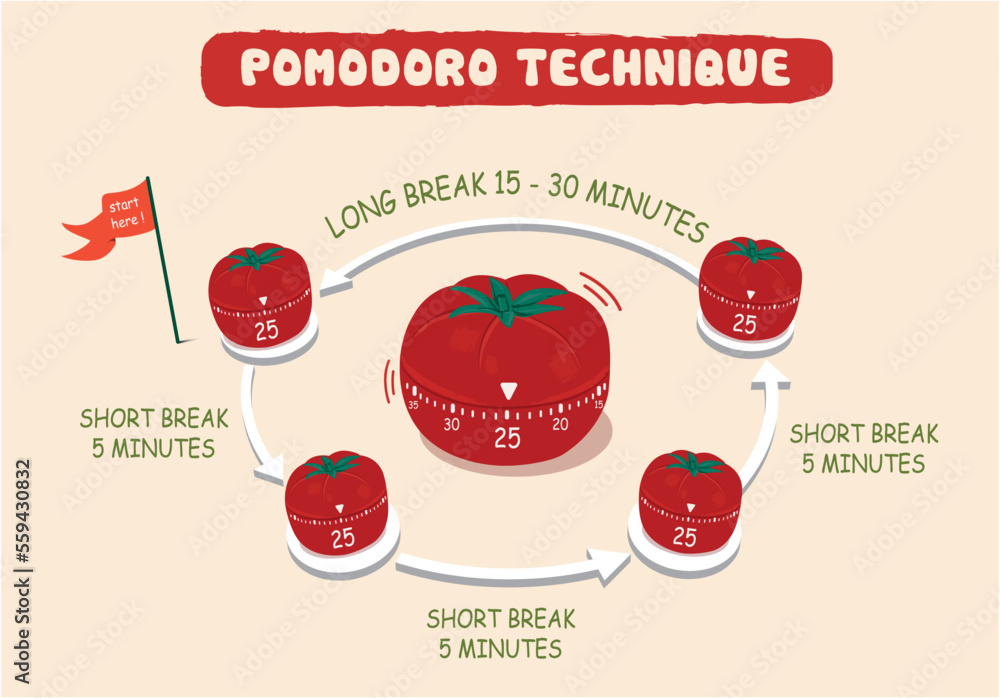
The primary components of a Pomodoro timer include a timer mechanism, a work interval setting, and a break interval setting. The timer mechanism ensures accurate tracking of time, providing a clear start and end to each work phase. The work interval, commonly set to 25 minutes, is the time dedicated to uninterrupted work on a specific task. Following each work interval, a break interval of 5 minutes is scheduled, allowing for mental rest and recovery. After completing four work intervals, a longer break of 15 to 30 minutes is encouraged, further supporting cognitive rejuvenation.
Standard time intervals used in the Pomodoro technique
The Pomodoro technique primarily utilizes established time intervals to optimize work and rest cycles. The standard framework includes:
- Work Interval: 25 minutes of focused work.
- Short Break: 5 minutes of rest after each work interval.
- Long Break: 15 to 30 minutes after completing four work intervals.
These structured intervals help maintain sustained attention and prevent burnout, ensuring a balanced approach to productivity.
Significance of breaks in the Pomodoro method
Breaks play a crucial role in the Pomodoro technique, significantly influencing productivity and cognitive performance. Regular breaks are essential for mental clarity and sustained focus, as they allow the brain to recharge and process information. The importance of breaks can be summarized in the following points:
- Cognitive Recovery: Breaks provide the mind with necessary downtime, helping to prevent fatigue and maintain high levels of concentration.
- Enhanced Creativity: Stepping away from a task can lead to bursts of creativity and problem-solving, as a relaxed mind often thinks outside the box.
- Physical Movement: Short breaks encourage users to stretch or move, counteracting the negative effects of prolonged sitting.
Implementing these breaks not only improves overall productivity but also contributes to a healthier work-life balance, making the Pomodoro technique an effective time management strategy.
How to effectively implement the Pomodoro technique in daily routines
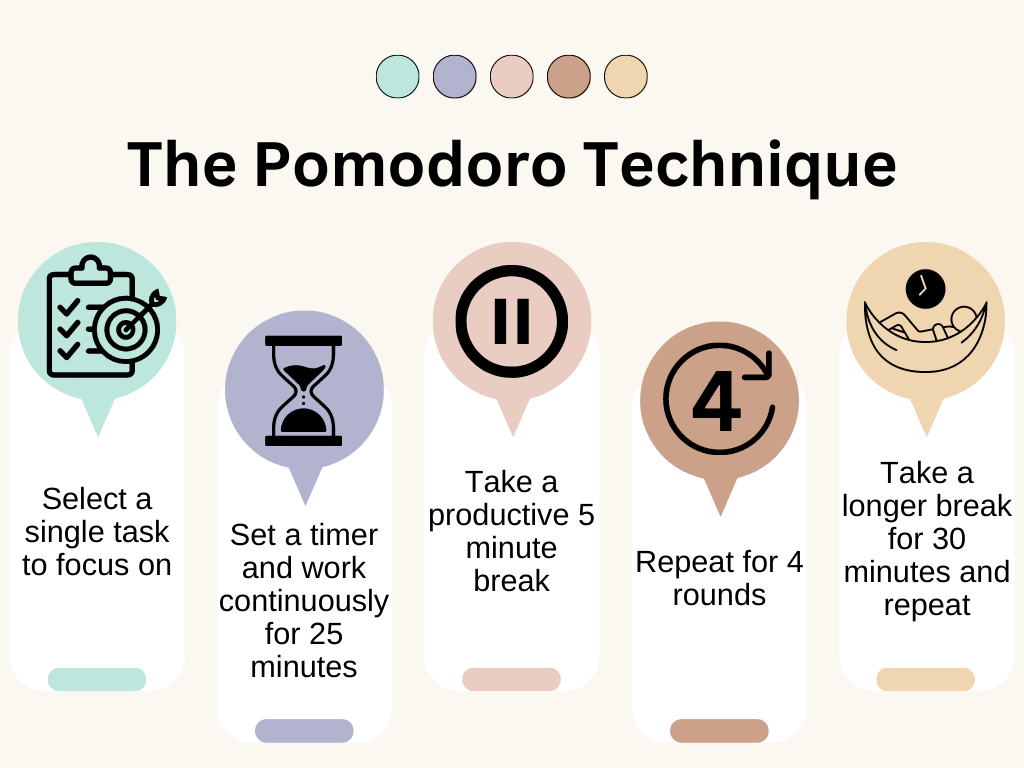
The Pomodoro technique is a powerful time management method that can enhance productivity and focus. By breaking work into intervals, traditionally 25 minutes in length, separated by short breaks, this technique helps maintain high levels of concentration. Implementing the Pomodoro technique into your daily routine can lead to improved efficiency and a better work-life balance. Below is a structured approach to incorporate this method seamlessly into your daily schedule.
Step-by-step implementation of the Pomodoro technique
To integrate the Pomodoro technique into your work routine effectively, follow these steps:
1. Choose a Task: Select a specific task or project you want to work on. It could be anything from writing a report to studying for an exam.
2. Set a Timer: Use a timer to track your Pomodoro sessions. Whether it’s a physical timer, a smartphone app, or an online tool, make sure it can clearly indicate the countdown.
3. Work for 25 Minutes: Focus solely on the chosen task for 25 minutes without any distractions. This is your Pomodoro session.
4. Take a Short Break: After the timer goes off, take a 5-minute break. Use this time to stretch, grab a drink, or do something enjoyable away from your workspace.
5. Repeat the Process: After four Pomodoros, take a longer break of 15-30 minutes to recharge before starting the next round.
“The Pomodoro technique encourages sustained focus and maximizes productivity by creating a structured work environment.”
Common challenges and solutions
While the Pomodoro technique is effective, several challenges may arise during its implementation. Here are some common issues and ways to overcome them:
– Distractions: Unexpected interruptions can disrupt your workflow. To mitigate this, inform colleagues of your work periods, use noise-canceling headphones, or find a quiet space to work.
– Task Complexity: Some tasks may require more time than a single Pomodoro allows. In such cases, break larger projects into smaller tasks that can be completed within the 25-minute window.
– Difficulty in Resuming Work: After a break, it might be tough to get back into the flow. To counter this, create a routine that signals the start of your work session, such as a specific action or a brief meditation.
Adjusting the technique for various tasks and environments
Flexibility in the Pomodoro technique allows adaptation to different tasks and settings. Here’s how to adjust it accordingly:
– For Creative Tasks: When working on creative projects, longer intervals may be beneficial. Consider extending your Pomodoro to 40 or 50 minutes while still taking short breaks.
– In a Team Environment: When collaborating with others, synchronize Pomodoros with your team. This can foster a shared focus, reducing interruptions and enhancing group productivity.
– For Remote Work: If you’re working from home, create a designated workspace that minimizes distractions. Personalize your Pomodoro sessions by using engaging tools or apps that align with your preferences.
By applying these strategies, the Pomodoro technique can be effectively incorporated into daily routines, enhancing productivity and encouraging a balanced approach to work.
Comparing the Pomodoro technique to other time management strategies
The Pomodoro technique is a popular time management method that utilizes timed intervals to enhance focus and productivity. However, it is not the only strategy available. This section explores how the Pomodoro technique compares to other prevalent time management methods, highlighting both similarities and differences, as well as benefits and drawbacks of each approach.
The Pomodoro technique revolves around working in short sprints, typically 25 minutes in duration, followed by brief breaks. This method contrasts with various other time management strategies, such as time blocking and the Eisenhower matrix, which adopt different approaches to prioritizing tasks and managing time.
Similarities and Differences with Other Time Management Methods
Understanding the core principles of different time management techniques can help individuals select the best approach for their specific needs. Here are key comparisons between the Pomodoro technique and other popular methods:
– Time Blocking: This method involves scheduling extensive blocks of time for specific tasks throughout the day. Unlike the Pomodoro technique, which promotes short, focused bursts of work, time blocking encourages longer, uninterrupted work periods.
– Eisenhower Matrix: This strategy prioritizes tasks based on urgency and importance, allowing users to focus on what matters most. While the Pomodoro technique centers on time intervals, the Eisenhower matrix emphasizes task prioritization and decision-making.
The following list highlights some benefits and drawbacks of the Pomodoro technique in comparison to time blocking and the Eisenhower matrix:
– Benefits of the Pomodoro Technique:
– Enhances focus and prevents burnout by incorporating regular breaks.
– Simple and easy to implement without extensive planning.
– Helps manage distractions effectively during work sessions.
– Drawbacks of the Pomodoro Technique:
– May not suit tasks requiring longer periods of concentration.
– Frequent breaks can interrupt the flow for some individuals.
– Benefits of Time Blocking:
– Provides a comprehensive view of the day’s agenda, promoting effective planning.
– Allows for deep work sessions, which can lead to higher quality output.
– Drawbacks of Time Blocking:
– Requires more upfront planning and organization.
– Inflexibility can lead to frustration if unexpected tasks arise.
– Benefits of the Eisenhower Matrix:
– Helps users prioritize tasks effectively, ensuring focus on high-impact activities.
– Encourages critical thinking about task importance.
– Drawbacks of the Eisenhower Matrix:
– May be time-consuming to categorize tasks initially.
– Over-analysis of tasks can lead to procrastination.
Effectiveness Levels and Suitable Use Cases
The effectiveness of each time management technique can vary based on individual preferences and the nature of tasks involved. The table below Artikels the effectiveness levels of the Pomodoro technique compared to time blocking and the Eisenhower matrix, along with suitable use cases for each method.
| Method | Effectiveness Level | Suitable Use Cases |
|---|---|---|
| Pomodoro Technique | Moderate to High | Ideal for tasks requiring focus, such as studying or writing. |
| Time Blocking | High | Best for project management and comprehensive daily plans. |
| Eisenhower Matrix | High | Effective for prioritizing tasks and managing workloads in a busy environment. |
The choice of time management strategy should align with personal work habits and the specific demands of tasks at hand.
The psychological effects of using the Pomodoro technique timer
The Pomodoro technique, a time management method developed by Francesco Cirillo, incorporates timed intervals of work followed by short breaks. This structured approach not only enhances productivity but also has significant psychological benefits for individuals. By understanding its influence on focus, concentration, and motivation, we can appreciate the depth of its effectiveness.
The Pomodoro technique actively boosts focus and concentration levels in individuals by breaking work into manageable intervals. Each 25-minute work session promotes sustained attention, allowing the brain to engage deeply without overwhelming fatigue. This method encourages a state of flow, where distractions are minimized, and attention can be fully directed toward a specific task. Research has shown that the time constraint of the Pomodoro technique can enhance cognitive performance, leading to clearer thinking and better retention of information.
Research findings related to productivity and mental well-being
Numerous studies have explored the impact of the Pomodoro technique on productivity and mental health. For instance, a study published in the Journal of Applied Psychology found that participants using time management techniques, including the Pomodoro method, reported heightened efficiency and lower stress levels. This is primarily because the technique facilitates regular breaks, which are essential for cognitive recovery and overall mental well-being.
Here are some key findings from various research on the Pomodoro technique:
- Improved productivity: A study by the Dominican University of California indicated that individuals who set specific goals and used structured time management techniques saw a 20-25% increase in productivity compared to those who did not.
- Reduction in mental fatigue: Regular breaks, as practiced in the Pomodoro technique, have been associated with lower levels of mental fatigue and burnout, promoting sustained engagement over longer periods.
- Enhanced motivation: The sense of accomplishment from completing each Pomodoro can significantly boost motivation and engagement in tasks, creating a positive feedback loop that encourages further productivity.
“The Pomodoro technique not only enhances productivity but significantly contributes to better mental health by fostering a structured approach to work.”
Motivational aspects of using a timer
The use of a timer in the Pomodoro technique plays a pivotal role in enhancing motivation and performance. By setting a clear time limit for tasks, individuals are encouraged to focus solely on the work at hand, minimizing the impulse to multitask or procrastinate. This method creates a sense of urgency, prompting individuals to complete their work within the designated time frame.
Essential motivational aspects of the timer include:
- Accountability: The timer serves as a commitment device, holding individuals accountable for their time and productivity during each Pomodoro session.
- Goal setting: Each session provides a tangible goal to achieve within a set timeframe, which can be motivating and rewarding upon completion.
- Structured breaks: Knowing that there will be a break after each session allows individuals to work with greater intensity, as they can look forward to a pause and recharge moment.
The implementation of the Pomodoro technique not only structures work time effectively but also fosters a sense of accomplishment and satisfaction, contributing positively to an individual’s overall mindset and performance.
Tools and resources for tracking Pomodoro sessions
The Pomodoro Technique is an effective time management strategy that can be greatly enhanced with the right tools and resources. Utilizing various apps, timers, and devices can help you stay focused and maintain productivity throughout your work sessions. Below are some of the top tools designed to optimize your Pomodoro experience.
Recommended Pomodoro timers
Choosing the right Pomodoro timer can significantly affect your ability to concentrate and manage time effectively. Here’s a curated list of some highly recommended Pomodoro timers along with their unique features:
- Focus Keeper: This app helps you stay productive by allowing you to customize the length of work sessions and breaks. It offers statistics to track your productivity over time.
- Forest: A unique twist on the Pomodoro Technique where you grow a virtual tree while you focus. If you exit the app, your tree dies, encouraging you to stay on task.
- Toggl: While primarily a time-tracking tool, Toggl can be adjusted to use the Pomodoro Technique by setting timers for work sessions and breaks, providing detailed reports on how you spent your time.
- Be Focused: This app combines task management with the Pomodoro Technique, allowing you to break tasks into smaller ones and track your progress with ease.
- Pomodone: Integrating with various project management tools, Pomodone helps you apply the Pomodoro Technique directly to your tasks, making it easier to manage your workload.
Comparison of different tools
Understanding the differences among these tools can help you choose the one that best suits your needs. The following comparison table Artikels key functionalities and user ratings for each timer:
| Tool | Unique Features | User Rating (out of 5) |
|---|---|---|
| Focus Keeper | Customizable sessions and statistics tracking | 4.7 |
| Forest | Gamifies focus with tree planting | 4.9 |
| Toggl | Comprehensive time tracking and reporting | 4.5 |
| Be Focused | Task management integration | 4.6 |
| Pomodone | Integration with project management tools | 4.4 |
Utilizing the right tools can enhance your productivity and make your Pomodoro sessions more effective.
Customizing the Pomodoro technique for different work styles
The Pomodoro Technique is a flexible time management method that can be adapted to suit various work styles. Understanding how to customize it can enhance productivity, whether you’re engaged in creative tasks or analytical work. By tailoring the work and break periods, you can maximize your focus and efficiency, making this technique a powerful tool in your productivity arsenal.
Adapting for Creative and Analytical Tasks
Creative tasks often require bursts of inspiration and brainstorming, while analytical tasks may benefit from structured, logical thinking. Tailoring the Pomodoro Technique to these different needs can significantly enhance your output.
For creative tasks, consider the following tips:
- Use shorter work intervals, like 25 minutes, to capture spontaneous ideas and maintain a fresh perspective.
- Incorporate longer breaks to recharge your creativity, allowing time for reflection and exploration of different concepts.
- Experiment with music or ambient sounds during work periods to stimulate creativity and keep motivation high.
In contrast, when handling analytical tasks:
- Utilize longer work sessions, such as 40 or even 50 minutes, to delve deeper into complex problems without interruptions.
- Adopt shorter breaks of about 5 minutes to maintain focus and prevent mental fatigue.
- Consider using a timer with visual or auditory cues to signal the end of each session, reinforcing the structure of your work periods.
Modifying Length of Work and Break Periods
Personalizing the length of your work and break periods is crucial for optimizing the Pomodoro Technique to fit your individual preferences. Everyone has a unique attention span and productivity rhythm, so adjustments can lead to better results.
It’s beneficial to experiment with different configurations:
- Start with the original 25/5 split, then assess your productivity and comfort levels.
- For those who find longer focus periods more effective, try a 50/10 or even a 60/15 setup.
- Observe your performance after each session; adjust durations based on what feels most natural for you.
Importance of Personalizing the Method
The effectiveness of the Pomodoro Technique hinges on its customization to fit your work style and personal preferences. Personalization ensures that the method works with your natural rhythms and enhances your productivity.
“Maximizing the Pomodoro Technique’s effectiveness is about aligning the method with your unique work style.”
When adapting the technique, consider the following:
- Evaluate how you feel after different work and break periods; use this feedback to refine your approach.
- Incorporate activities during breaks that rejuvenate you, such as stretching, meditation, or quick walks.
- Track your accomplishments and the flow of your work to identify patterns that can inform your future sessions.
Success stories of individuals utilizing the Pomodoro technique
The Pomodoro technique has gained traction in various professional domains, showcasing remarkable success stories of individuals who have harnessed its power to enhance productivity. This time-management method, developed by Francesco Cirillo, has enabled countless professionals to focus their efforts more effectively, leading to significant improvements in their work and personal lives.
Numerous professionals across diverse fields have reported transformative outcomes from implementing the Pomodoro technique. From writers to software developers and even university students, the method has proven to be adaptable and effective in boosting productivity and maintaining focus. Below are some compelling testimonials and success stories from different professions.
Examples of Professionals
In the creative and technical realms, the Pomodoro technique has facilitated remarkable changes. Here are a few examples:
- Jessica, a freelance writer, reported that using the Pomodoro technique allowed her to complete her articles faster without compromising quality. By breaking her writing sessions into manageable 25-minute intervals, she was able to maintain high levels of concentration and creativity, resulting in a 30% increase in her output.
- Tom, a software developer, shared his experience of combating distractions. After adopting the technique, he found that his coding efficiency improved significantly. By focusing on one task at a time for 25 minutes, he was able to eliminate interruptions, leading to faster project completions and enhanced job satisfaction.
- Emily, a university student, utilized the Pomodoro technique during her exam preparation. She noted a drastic improvement in her retention and understanding of complex subjects, resulting in higher grades. The structured study sessions helped her avoid burnout and manage her time more effectively.
The Pomodoro technique has also made an impact in other fields, such as sales and healthcare.
Personal Testimonials and Outcomes
Many individuals have shared specific outcomes and benefits they experienced after implementing the Pomodoro technique:
- Mark, a sales executive, found that the technique helped him in making cold calls more effectively. By dedicating 25 minutes to focused outreach, he reported a 20% increase in appointments set, attributing his success to the method’s structured approach.
- Sarah, a nurse, described how the Pomodoro technique improved her efficiency during shifts. By breaking her tasks into timed segments, she could prioritize patient care better, leading to enhanced patient satisfaction and reduced stress levels during her busy shifts.
- Alex, a graphic designer, experienced heightened creativity and focus. By using the Pomodoro technique, he was able to tackle client projects more efficiently and met deadlines without the usual last-minute rush, earning positive feedback from clients.
“The Pomodoro technique changed the way I approach my work. It made tasks seem more manageable and less overwhelming.” – Sarah, Nurse
These success stories illustrate the versatility of the Pomodoro technique across various professional settings. Users have found that this simple yet effective method not only enhances productivity but also improves overall work-life balance, making it a powerful tool for anyone looking to optimize their time management.
Last Word
In conclusion, the Pomodoro technique timer stands out as a powerful ally in the quest for improved productivity and work-life balance. By integrating this method into your daily routine, you can unlock new levels of focus, creativity, and efficiency. As we’ve explored its origins, advantages, and practical implementation, it’s clear that this technique not only enhances our work habits but also fosters a healthier approach to managing our time. So why not give it a try and experience the positive impact on your productivity firsthand?
FAQ Section
What is the ideal setting for using a Pomodoro timer?
The ideal setting is a quiet environment free from distractions, allowing you to focus fully during work intervals.
Can the Pomodoro technique be used for team projects?
Yes, teams can adopt the Pomodoro technique by synchronizing their timers to enhance collaborative focus and minimize interruptions.
How do I customize my Pomodoro intervals?
You can adjust the length of work and break periods based on your personal preferences and the complexity of tasks.
Is there a specific app recommended for Pomodoro tracking?
There are several great apps like Focus Keeper, Forest, and Pomodone that effectively support tracking Pomodoro sessions.
Can the Pomodoro technique help with procrastination?
Absolutely! The structured intervals help reduce the overwhelming feeling of large tasks, making it easier to start and stay on track.